Thanks to all of you who voted for this moron
We all know that Prime Minister Netanyahu has problems from the right side of his coalition. Now, it turns out, he has even bigger problems from the left of the coalition. No, not Tzipi Livni. That would have been expected. It's Yair Lapid.
In August 2013, Lapid, who seems to have an IQ somewhere in the 70's, undercut Israel's most basic position in the 'negotiations' with the 'Palestinians' by telling the New York Times' Roger Cohen (the one who thinks that
Jews in Iran just love the Ayatollahs) that it doesn't matter whether the 'Palestinians' accept
Israel as a Jewish state as part of a final agreement. That acceptance is code for "end of conflict." Lapid has completely undercut his Prime Minister's (and just about everyone else's) position on the issue. And Cohen has exposed that fact in a column published in Wednesday's New York Times - the day before US Secretary of State John FN Kerry's arrival.
Then there is the rebounding Israel-is-a-Jewish-state bugbear: Netanyahu
wants Palestinians to recognize his nation as such. He has recently
called it “the real key to peace.” His argument is that this is the
touchstone by which to judge whether Palestinians will accept “the
Jewish state in any border” — whether, in other words, the Palestinian
leadership would accept territorial compromise or is still set on
reversal of 1948 and mass return to Haifa.
Mahmoud Abbas, the Palestinian president, says no; this “nyet” will
endure. For Palestinians, such a form of recognition would amount to
explicit acquiescence to second-class citizenship for the 1.6 million
Arabs in Israel; undermine the rights of millions of Palestinian
refugees; upend a national narrative of mass expulsion from land that
was theirs; and demand of them something not demanded from Egypt or
Jordan in peace agreements, nor of the Palestine Liberation Organization
when, in 1993, Yasir Arafat wrote to Yitzhak Rabin that it “recognizes
the right of Israel to live in peace and security.”
This issue is a waste of time, a complicating diversion when none is
needed. As Shlomo Avineri, a leading Israeli political scientist, put it
to me, “It’s a tactical issue raised by Netanyahu in order to make
negotiations more difficult.”
Of course, any two-state peace agreement will have to be final and
irreversible; it must ensure there are no further Palestinian claims on a
secure Israel. It may well require some form of words saying the two
states are the homelands of their respective peoples, a formula used by
the Geneva Initiative. But that is for another day.
If Israel looks like a Jewish state and acts like a Jewish state, that
is good enough for me — as long as it gets out of the corrosive business
of occupation. Zionism, the one I identify with, forged a Jewish
homeland in the name of restored Jewish pride in a democratic state of
laws, not in the name of finicky insistence on a certain form of
recognition, nor in the name of messianic religious Greater Israel
nationalism.
When I spoke to him in Tel Aviv a few months ago, Yair Lapid, a top
government minister, said: “The fact that we demand from Palestinians a
declaration that they recognize Israel as a Jewish state, I just think
this is rubbish. I don’t need that. The whole point of Israel was we
came here saying we don’t need anyone else to recognize us anymore
because we can recognize ourselves. We are liberated.”
There are huge differences between Jordan and Egypt on the one hand, and the 'Palestinians' on the other, and there is every reason in the world why an agreement between Israel and the 'Palestinians' ought not to mimic the agreements that it made with those two countries. But let's leave that for a minute. How does Lapid come off contradicting his Prime Minister?
The answer is that
it's not the first time, and since Netanyahu didn't act the first time Lapid shot off his mouth, Lapid went ahead and did it a second time.
Last year, Lapid made a similar statement, during an interview the Charlie Rose show in New York.
"I
don't feel we we need a declaration from the Palestinians that they
recognize Israel as a Jewish state,” Lapid said. “My father [former
Justice Minister Yosef Lapid] didn’t come to Haifa from the Budapest
ghetto to get recognition from [Palestinian Authority President] Mahmoud
Abbas. The whole concept of the State of Israel is that we recognize
ourselves. After 2,000 years of being dependent on other people, we are
independent and make our own rules now.”
Is Lapid willing to sign an agreement without an end of conflict provision? Is he willing to let the 'Israeli Arabs' undermine a rump state that is left after an agreement?
One has to wonder - again - what Naftali Bennett was thinking when he entered into his agreement with Lapid, and what Netanyahu was thinking when he took the two of them into his government. Actually, I don't have to wonder about Netanyahu. At heart,
he's Yitzchak Rabin and Ehud Barak.
You mean you didn't think you were voting for the Labor party in 2009 and 2013? Surprise, surprise, surprise....
Labels: Binyamin Netanyahu, Ehud Barak, Israel is a Jewish state, Roger Cohen's obsession with Israel, Yair Lapid, Yitzchak Rabin
Soccer Dad's Middle East Media Sampler
Here's Soccer Dad's Middle East Media Sampler for Friday, Fenruary 15.
1) Was King Herod a Palestinian?
Earlier this week the New York Times reported about Anger That a Herod Show Uses West Bank Objects. This is an odd angle to report as the article tells us.
The Israel Museum on Tuesday opened its most ambitious archaeological
exhibition and the world’s first devoted to Herod, the lionized and
demonized Rome-appointed king of Judea, who reigned from 37 to 4 B.C.E.
and is among the most seminal and contentious figures in Jewish history.
But the exhibition, which the museum director described as a “massive
enterprise” that involved sifting through 30 tons of material from
Herodium and reconstructing 250 artifacts, has also brought its own bit
of controversy.
Instead of discussing the historical significance of the exhibit, the report focuses on the controversy.
The Palestinian Authority says the exhibition is a violation of
international law because much of its material was taken from near
Bethlehem and Jericho, both in the Israeli-occupied West Bank. An
Israeli group of archaeologists and activists complains that the museum,
however unwittingly, is helping the Jewish settlement movement advance
its contention that the West Bank should be part of Israel and not a
Palestinian state.
“What the Israel Museum is doing is like coming and saying, ‘Listen, the
heritage of the West Bank is part of our heritage first of all,’ ” said
Yonathan Mizrachi, an archaeologist who helped found the Israeli group,
Emek Shaveh, in 2009. “It’s part of the idea to create the narrative
that those sites, no matter what the political solution,” are “part of
the Israeli identity.”
James S. Snyder, the director of the museum, dismissed such criticism as
propaganda and political opportunism. The Oslo Accords signed by the
Israelis and Palestinians in the 1990s provide for Israeli involvement
in archaeology in the territories until the resolution of the overall
conflict, and Mr. Snyder said that at the end of the exhibition, the
museum plans to return the artifacts to the West Bank, to Israel’s civil
administration, which he said would arrange for their return to the
sites from which they were taken or to store the material until “the
site can be prepared for its care and/or display.” He noted that the
museum had spent a “huge” sum — he would not specify how much — to
restore and make available for public consumption artifacts that might
otherwise have been lost, like many of the antiquities in Iraq and
Egypt.
This is ridiculous. Before there were people who self-identified as
Palestinians there was a phenomenon called history. Just because the
Palestinian narrative isn't supported by history doesn't mean that the
history did not occur.
(It's disappointing that the article didn't point out that the
Palestinians often show no regard for archaeological sites as reported here.)
Unfortunately, instead of focusing on the history shown by the exhibit,
the New York Times instead focused on the hurt feelings of the
Palestinians.
2) Whither Fayyadism?
Roger Cohen laments the fate of Salam Fayyad in The Success that failed. This is the New York Times and it is columnist Roger Cohen, so this is no surprise:
He identified some of the issues: settlement expansion; Israeli
military incursions into Palestinian-controlled areas; the failure to
extend the Palestinian security presence in the West Bank; the “complex
and capricious” process of gaining access to the more than 60 percent of
the West Bank known as “Area C” and under direct Israeli military
control; the Israeli use of tax revenues as a spigot that can be turned
on and off to hurt the Palestinian Authority; the lack of access to 3G
technology and Israeli control of frequencies; the difficulty of
exporting to Israel. All of these factors together, Fayyad said, had
made governance “an exercise in impossibility.”
Then, of course, there is the internal Palestinian question, now
referred to as the “reconciliation” issue. The Palestinian national
movement is crippled by its split. Hamas rules in Gaza. President
Mahmoud Abbas and Fatah rule in the West Bank.
Everything that Fayyad claims, Cohen accepts without reservations.
Israeli military incursions? Those shouldn't be happening because the
Palestinian police force has been keeping the peace. But a few weeks ago
the IDF broke up a Hamas cell near Hebron.
Elsewhere Cohen mentions that IMF gave its approval to the Palestinian
statehood building program, but doesn't mention that just a few weeks
ago, the Palestinians were once again asking for Arab nations to make
good on their pledges. A well functioning society can generate its own
revenues.
Fayyad also complains that the Obama administration didn't get Israel to
stop settlement building. That's something it did do and it still did
not bring the Palestinians to the table for any meaningful negotiations.
Jonathan Tobin attacks the premise of the op-ed:
The most important thing to understand about Fayyad’s place in
Palestinian politics is that he has always been a man without a party.
In a political culture in which membership in one of the two main terror
groups — Fatah and Hamas — or one of the smaller splinter organizations
like Islamic Jihad has been keystone to identity and the ability to get
ahead, Fayyad is that rarest of Palestinian birds: a true independent.
In a society in which the ability to shed Israeli and Jewish blood has
been the only true indicator of street cred, Fayyad has always come up
short. Though Abbas and others recognized his ability as well his
ability to charm the Americans into keeping U.S. aid flowing to
Ramallah, he has never had anything that remotely resembled a political
constituency. Palestinians may long for good government and the rule of
law as much as any other people, but Fayyad’s platform of cooperation
with Israel and peace lacked support.
That Fayyad would blame the Israelis rather than his own people for his
failure is understandable since to do otherwise would be a death
sentence. But his complaints about Israeli settlements or security
measures in the West Bank lack credibility. The fact that Israelis have
continued to build in Jerusalem and the suburban settlement blocs that
everyone understands would remain within Israel in the event of a peace
deal renders the charge that they will prevent the creation of a
Palestinian state elsewhere absurd. As for Israeli incursions into the
West Bank, were Abbas’ security forces interested in foiling terror or
stamping out Hamas cells as they are obligated to do under their Oslo
commitments, they wouldn’t be necessary. If Israel has sought to exert
pressure on the PA it is because Abbas remains determined to avoid peace
talks and his governments remains a font of anti-Semitic incitement
that lays the foundation for endless conflict.
Fayyad can complain as much as he wants about Israel, but the simple
fact is that he has little or no political support. Cohen could have
looked into why that was so, but it's so much easier to blame Israel.
3) One last item about prisoner X
In the course of the reporting on Prisoner X there have been a number of details that now seem to be wrong. David Bernstein notes at the Volokh Conspiracy:
It seemed to me that van Esveld was jumping to a lot of conclusions
based on whatever information the reporter fed to him. As it turns out,
subsequent media reports have confirmed that (a) the Australian government was informed of Zygier’s arrest back in February 2010,
months before his suicide, and was informed of his death the day after
it happened; and (b) Zygier was represented by counsel through his
entire ordeal, and indeed saw one of his attorneys just a few days
before his suicide.
Bill van Esveld is a spokesman for HRW, who accepted every single damning bit of information about the case as fact.
Labels: Middle East Media Sampler, Mossad, New York Times, Palestinian people, Roger Cohen's obsession with Israel, Salam Fayyad, Soccer Dad
Soccer Dad's Middle East Media Sampler
Here's Soccer Dad's Middle East Media Sampler for Friday, January 26.
1) False friend Cohen
In Israel's True Friends, Roger Cohen wrote argued that Israel's "'true friends' ... are in facts true friends only of the Israeli right:"
... propels Israel into repetitive miniwars of dubious strategic value.
(Apparently he needed some editing as the verb "propels" doesn't seem to match its antecedent.)
According to a recent paper, Operation Pillar of Defense: Objectives and Implications:
From a military standpoint, Operation Pillar of Defense was different
from Operation Cast Lead in several significant ways. Since 2008, Hamas
and other Gaza factions have expanded their rocket arsenals to include
longer-range rockets. In 2008, Israeli intelligence estimated that all
factions in Gaza possessed around five thousand rockets; by the outbreak
of Pillar of Defense they were estimated to have ten to twelve
thousand, including, for the first time, rockets that could reach Tel
Aviv. Indeed, those rockets were used during the recent conflict, albeit
in a symbolic fashion.
Israel, however, did not sit idly by between these two operations, and
the cardinal development of this conflict was the amazingly successful
performance of the Israeli-manufactured Iron Dome rocket-defense system.
The deterrence achieved by Operation Cast Lead afforded Israel some
time, and Israel used this time to develop Iron Dome with its remarkable
85-percent success rate achieved during Operation Pillar of Defense,
providing both security and a sense of security to the Israeli
population. That, moreover, was one of the major reasons Israel did not
ultimately feel it had to launch a ground operation into Gaza. In the
absence of Iron Dome, the pressure in Israel – in response to casualties
and damage – may well have pushed the government into such an
operation, as occurred during Cast Lead.
Cast Lead and Pillar of Defense weren't propelled by an false friends of
Israel. They were in response to growing terrorist threats.
Elder of Ziyon notes:
It has been over two months since the last rocket was launched from Gaza into Israel.
...
As far as I can tell, there has never been a two-month period without
rockets into Israel since the first Qassam was shot into Israel in
February 2002.
"Strategically dubious?"
Given the obvious falsity of his claim, Cohen loses any credibility to
designate others to be friends of Israel or claim to be one himself.
2) The Hillary watchdogs
The Washington Post has a bewildering editorial, Hillary Clinton’s clarity on threats in North Africa. Why is it bewildering?
The outgoing secretary’s statements were particularly striking when
compared with President Obama’s inaugural address Monday, which promised
to end “a decade of war” in favor of nation-building at home, and with
the White House’s current approach to Mali. France sent troops there
this month to prevent jihadists linked to al-Qaeda who are entrenched in
Mali’s northern deserts from taking over the rest of the country.
But as the Wall Street Journal reported Thursday, Mr. Obama and his
advisers have taken a skeptical view of the need for U.S. involvement.
French requests for air refueling and surveillance help are still on ice
two weeks after being made; the administration grudgingly agreed to
transport some French troops to the country but only after trying to
stick Paris with the bill. The Journal reported that while the Pentagon
has wanted to target the leaders of al-Qaeda in the Islamic Maghreb
(AQIM), which was involved in the Benghazi attack as well as last week’s
assault on a gas field in Algeria, White House policymakers argue that
the group doesn’t pose a direct threat to the United States.
For one thing, while the Post's editors clearly prefer Secretary
Clinton's views to those of the White House, there's nothing more here
than an implicit criticism of the President.
But there's a question here. If Secretary Clinton is at such odds with
the President's foreign policy why did she serve the whole first term?
This isn't some minor disagreement, but one about the fundamental
direction of the country's foreign policy. Even if she's a loyal
soldier, how could she have possibly represented the administration if
she holds view so different from President Obama?
The editorial continues:
Ms. Clinton evidently doesn’t agree. “People say to me all the time,
well, AQIM hasn’t attacked the United States,” she said. “Well, before
9/11, 2001, we hadn’t been attacked on our homeland since, I guess, the
War of 1812 and Pearl Harbor. So you can’t say, well, because they
haven’t done something they are not going to do it.”
...
The outgoing secretary’s point about U.S. leadership — and the results
of its absence — doesn’t apply just to Mali. It is equally true of
Syria, Afghanistan, Iraq and other “unstable environments.” If Mr. Obama
continues to eschew an active U.S. role in those places, or to retreat
from one, there will be, as Ms. Clinton said, “consequences.”
There's some wisdom in these words, but is this what she truly believes?
Talking tough is not the same thing as acting in accordance with those
words.
This brings us to the other puzzling aspect of the editorial. The
editorial omits any mention of the Secretary's "What difference does it make?" (Not that she took that approach when the subject was Iraq during the Bush administration.)
After explaining what difference the cause of the attack made, Barry Rubin observes:
The Obama Administration wants to bury this analysis because it calls
attention to the threat of revolutionary Islamism and, in the last
case, to the negative aspects of its own Libya policy. Whether or not
that initiative of overthrowing Libyan dictator Muammar Qadhafi was a
good idea the fact remains that such a policy has costs. Whether or not
unilateral actions and the use of force is a good idea or not in any
specific case, standing aside and doing nothing while Americans were
killed will also have its costs. Whether or not America has made
mistakes in its past policies, apologies and concessions will only
persuade the Islamists and a large sector of the local population that
the United States is weak, can be defeated, and therefore attacks should
be escalated.
Aside from the irrelevance of motive, the other point Clinton made was
to emphasize that the most important thing was to punish those
responsible. While that sounds impressive, virtually nothing has been
done to achieve that goal. In general, of course, the problem is
identifying and finding the terrorists, especially if they are located
in a country which provides a safe haven to terrorists. The United
States never effectively punished, for example, those who attacked the
Marine barracks in Beirut in the 1980s.
It would appear that Secretary Clinton's tough talking was just words.
Possibly she's trying to maintain her viability as a candidate in 2016.
But the Washington Post took her empty words as promises of action.
(Similarly, I heard Bob Schieffer previewing Face the Nation on the
radio this morning, saying "She acquitted herself well.") Our tough
watchdog media has apparently decided that boosting Hillary Clinton is
its primary duty at this time.
Labels: al-Qaeda, Barack Hussein Obama, Benghazigate, Hillary Clinton, Middle East Media Sampler, Roger Cohen's obsession with Israel, Soccer Dad
Soccer Dad's Middle East Media Sampler
Here's Soccer Dad's Middle East Media Sampler for Thursday, September 20.
1) Cohen's trifecta
Never wrong for long
is a tour de force for Roger Cohen. It is a column that is both so
spectacularly uninformed, illogical and vitriolic, I don't know how he
can hope to match it.
And here we are after a week of engineered tumult. The right thinks
its case is proved: “You see, we told you so, the Arab Spring was a
false dawn. Muslims are incapable of democracy. They are all
anti-Western fanatics. Obama was wrong to support the democratic
transformation that has brought Islamic parties to power.”
The White House is on the defensive; it even requested at one point that
Google, the parent of YouTube, consider removing the movie — an
ill-considered request wisely resisted. Free speech is meaningless if it
does not extend even to views that are loathsome.
In fact the violence does not change the critical evolution underway in
the Arab world, one that needed more support from Obama, not less.
Mohamed Morsi, the Egyptian president, was slow to react to violence. But it is far better to have his Muslim Brotherhood grappling with Islamic extremists than an isolated U.S.-backed dictator; and
the debate now raging from Cairo to Tunis — a debate that would have
been impossible before the Arab Spring — is a necessary part of the slow
evolution of societies from terrorist-breeding passivity to
citizen-breeding agency.
In reviewing the riots that have been sweeping the Muslim world, Barry Rubin explains what happened in Egypt:
What happened in Egypt was very simple. The Egyptian government knew
that a demonstration would be held by radical anti-American forces,
including the local branch of al-Qaeda, outside the U.S. embassy.
Through an understanding of the ideology, analysis of public statements
and past experience, and probably intelligence penetration, it knew they
intended to storm the embassy.
The highest levels of the Egyptian government decided not to protect the
embassy, in breach of their international obligations. And they knew —
or rightly expected — that the Obama administration would not punish
them for behaving that way.
What’s the difference between Iran in 1978 and Egypt in 2012? In the
first case, the Iranian Islamist government let its supporters take over
the embassy completely and seized everyone inside as hostages. This led
to a confrontation. The more cautious Egyptian regime simply let the
mob trash the part of the embassy outside of the buildings. After all,
there are billions of dollars in U.S. funds and arms to be obtained by a
little restraint.
Morsi's did no "grappling" with the rioters. He was in league with them.
As Rubin notes later, Egypt is "now in the enemy category." Cohen is
deluded if he thinks that the current Egyptian government somehow helped
control the situation.
Next Cohen goes after PM Netanyahu:
This change is generational. The folly of this September may be
viewed one day as part of the evolution of the Brotherhood toward the
conservative pragmatism that has served Recep Tayyip Erdogan’s Justice
and Development well in Turkey.
That, I know, is an optimistic scenario. Memes have their own
destructive energy. Listen to Benjamin Netanyahu on CNN eliding the
truth for maximum panic: “All the things that you see now in these mobs
storming the American embassies is what you will see with a regime that
would have atomic bombs. You can’t have such people have atomic bombs.”
Who are “such people”? No matter that these were Arabs, not Iranians. No
matter that they were far from Tehran. No matter that Persians despise
Arabs and vice-versa. Netanyahu understands marketing: keep it simple in
a hyperconnected age because you won’t be wrong for long — and the dead
can’t issue a correction.
Netanyahu's complete statement was:
You know, this is not an electoral issue. It is not based on any
electoral consideration. I think that there's a common interest of all
Americans over all political persuasions to stop Iran.
This is a regime that is giving vent to the worst impulses that you see
right now in the Middle East. They deny the rights of women, deny
democracy, brutalize their own people, don't give freedom of religion.
All the things that you see now in these mobs storming the American
embassies is what you will see with a regime that would have atomic
bombs. You can't have such people have atomic bombs. And I believe
that's as important for Republicans as it is for Democrats, important
for Democrats as it is for Republicans. It's as important for President
Obama as it is for Mitt Romney. It's important for the future of our
world.
I realize that Netanyahu left something out, but it's pretty clear that
this he was referring to the attack on the American embassy in Tehran in
1979. "These people," may have been a poor choice of words, but what
Netanyahu was saying was when you have an Islamist government that
doesn't respect the rights of its own citizen and doesn't respect
international norms, you don't want that government to possess nuclear
weapons.
So great is Cohen's dislike of Netanyahu that he compared the Muslim
Brotherhood to the Turkey's (non-Arab) AKP Party in order to dismiss
Netanyahu's comparison of Islamists in Egypt to those in Iran. Logic, it
appears, isn't a prerequisite to write a regular column for the New
York Times.
2) Romney's Middle East peace "gaffe"
In all the discussion of Gov. Romney's "47%" comment or his criticism of
the American embassy for its plea to the demonstrators, I missed that
Romney made another "gaffe." Barry Rubin writes in Romney Tells the Key Truth Needed to Comprehend the Israel-Palestinian Conflict:
Romney said that one of the two ways he considered looking at the issue — a major qualification — is:
That the Palestinians have no interest whatsoever in establishing
peace, and that the pathway to peace is almost unthinkable to
accomplish.
He then continued doing the most basic, responsible thing a statesman
can do. Romney posited that a Palestinian state existed and then
discussed how this might create terrible security dangers for Israel,
including direct attack and the opening of Palestine’s territory to
radical regimes’ armies. For the meantime, the only choice might be the
status quo.
This is the kind of thing Israeli analysts, and many Americans, have
been saying for decades and detailing. It is the basic framework of how
any country must plan its survival, strategy, and national security.
Elder of Ziyon, Israel Matzav and JoshuaPundit also made observations about Romney's remarks.
Someone else wrote something similar, though the specific target of the observations was Mahmoud Abbas.
The 76-year-old president has been digging himself into a political
hole since early last year, when he announced a new strategy of seeking
recognition of Palestinian statehood by the United Nations and a
reconciliation deal with the rival Hamas movement. The recognition bid
flopped last fall in the U.N. Security Council, where the Palestinians
failed to obtain even the eight votes needed for a simple majority.
Meanwhile, talks with Hamas stalled, and long-overdue elections,
promised for last May, were once again put off.
During this time Mr. Abbas has mostly refused negotiations with Israel,
citing as a pretext the continued construction in Israel’s West Bank
settlements. Israel has offered the Palestinian Authority a number of
concessions in exchange for renewing the peace process, including
prisoner releases and a potentially lucrative natural gas concession.
But Mr. Abbas has not agreed.
Who wrote that? Was it someone in thrall to Sheldon Adelson? Hardly, it was from an editorial in the Washington Post, Mahmoud Abbas's UN Gambit.
3) Another pro-Israel New York Times reporter
Hillel Halkin reviews
Patrick Tyler's Fortress Israel: The Inside Story of the Military Elite
Who Run the Country—And Why They Can't Make Peace in the Wall Street
Journal. (h/t Sam Schulman)
Have you ever wondered why Iran, after halting (according to Western
intelligence reports) its nuclear weapons program in 2003, resumed it
(according to more such reports) by 2005? Patrick Tyler, a former New
York Times foreign correspondent, thinks he knows. It wasn't because the
initial shock of the American invasion of Iraq had worn off. The
Iranian nuclear program was probably restarted, Mr. Tyler believes, in
reaction to a "clandestine war" waged by Israel against Iran—a war
launched, he states in his new book "Fortress Israel: The Inside Story
of the Military Elite Who Run the Country—And Why They Can't Make
Peace," by the government of Benjamin Netanyahu that came to power
following the 2009 Israeli elections.
Come again? Is Mr. Tyler joking when he claims that post-2009 events
influenced a decision made by 2005? Not as far as I can tell after
several re-readings of his new book's prologue. Among the Mossad's many
accomplishments, it would seem, is also time travel.
Those are just the first two paragraphs. The rest is just as brutal.
Labels: Abu Mazen, anti-Israel obsession, Middle East Media Sampler, Mitt Romney, Palestinians, Roger Cohen's obsession with Israel, Soccer Dad, two-state solution
Soccer Dad's Middle East Media Sampler

Here's Soccer Dad's Middle East Media Sampler for Tuesday, December 6.
1) Home on the op-ed page
Roger Cohen weighs in on the recently aborted Israeli campaign designed to encourage yordim (Israeli expatriates) to return to Israel in Come Home to Israel. Observing that PM Netanyahu quickly pulled the campaign when confronted by Israeli diplomats, Cohen wonders:
My second reaction is that if Netanyahu could show a fraction of the nimbleness evident when American Jews are offended in instances where Turks are offended (by the killing of their citizens in international waters), or where President Barack Obama is offended (by ongoing settlement expansion in the West Bank against his express request), or where Egyptians are offended (by Israel’s dismissal of their democratic aspirations), then Israel would be in a better, less isolated place today.
Cohen's need to believe Israel is at fault is so strong he cites three examples which are true in the opinion pages of the New York Times, but not to those who are informed.
Claire Berlinski quoted an Israeli official on what prevented the agreement, which, according to a Turkish journalist was 95% complete. (h/t Elder of Ziyon):
Turkey, however, did not guarantee that "Turkish citizens and their legal representatives would not take legal action against Israel." It agreed to promise not to prosecute Israelis, but explained it could commit itself on behalf of private citizens in Turkey or abroad. This made some Israelis suspicious: what would happen if we endorsed the deal, and then had to face suits by members of the Turkish public, maybe even with covert assistance by the government? What guarantee did we have that the "deal" would actually end all claims and enable Israel and Turkey to reconcile and restart their relationship? This suspicion grew stronger in light of Turkey's insistence that the text should state that Israeli soldiers killed activists "intentionally." Why insist on this admission of guilt if not to enable legal action? As Gürsel himself says, this text which the Israeli government was supposed to approve was not completely agreed upon by Turkey, because they still wanted to include the intentionality wording. Even if the Israeli government had approved the draft, it would have left us with Turkish disavowal and discontent.
Another condition set forth by the Turks, and agreed to by Israel, was shelving the Palmer Report. Strange that Gürsel should say nothing of this, since he starts his discussion with the meaning of the Report to Turkey. The Turks were very keen on making the report disappear …
Finally, when it all came down to a discussion in the Israeli Cabinet, it wasn't just Lieberman who was reluctant to approve the whole package deal. Others, too, did not exactly trust Erdoğan, and raised doubts as to his real intentions: what would we get in return for the (indirect) apology, the compensations and the shelving of the report? Restoring ties with Ankara and an "end of conflict." But what if, after all was said and done, Erdoğan would claim that not all of his conditions were met? That Israel did not fulfill the requirements? All of a sudden, he speaks about lifting the siege on Gaza as a condition – but it was never mentioned in the negotiations nor in the draft! How easily it could have served as a pretext not to restore ties. And as for taking legal action against Israelis, well … With the intentionality clause still open, and with Turkey's non-commitment to stop private suits, and with the Palmer Report scrapped, where would it all lead us? Certainly not to an end of conflict, but rather to a further deterioration, with us in an inferior position.
In other words, Turkey was making last minute demands, something no rational negotiator would tolerate. The failure to come to an agreement was due to a last minute display of bad faith by Turkey, not to a lack of Israeli "nimbleness."
By the way, this account is consistent wit reporting in Cohen's paper, the New York Times. Back in August, Isabel Kershner reported:
The Israeli official, who also spoke on condition of anonymity, said the Turks kept adding conditions for a reconciliation, raising uncertainty in Mr. Netanyahu’s government over whether they were sincere and whether they would consider the case closed even if a deal were reached.
President Obama did indeed take offense at PM Netanyahu's actions, but Jackson Diehl shows that Netanyahu largely acquiesced to Obama's requests.
Though Netanyahu has recently allowed new settlement construction, it mostly has been in neighborhoods that Palestinian leders have already conceded will be part of Israel in a final settlement. This week he told his cabinet that West Bank outposts declared illegal by the Israeli Supreme Court would be uprooted.
In other words, Netanyahu has been an occasionally difficult but ultimately cooperative partner. He can be accused of moving too slowly and offering too little, but not of failing to heed American initiatives. And Palestinian President Mahmoud Abbas? For nine of the ten months of the Israeli settlement moratorium he refused Obama’s appeals to begin negotiations; after two meetings, he returned to his intransigence. Rejecting a personal appeal from Obama, he took his bid for statehood to the United Nations, where he may yet force the United States to use its Security Council veto.
Finally it's not at clear that Egyptians are resentful of Israel due to Israel's insufficient enthusiasm for Egypt's democratic aspirations. Seth Frantzman recently wrote that historically, this just isn't true. Israel, in fact, has hoped for Arab democracy.
However, the historical reality diverges greatly from these claims. In his excellent 2002 book, "David Ben-Gurion, the State of Israel and the Arab World," Zakai Shalom shows that Israeli leadership in the early days of the state hoped that the Arab world would democratize. Ben-Gurion wrote in 1956 that "democratic government is not only government elections but government whose main concern is to provide for the people's basic needs. In nearly every one of the neighboring states a military dictatorship or juntas or federal government exists...The Egyptian people are in need of development, health and education. But a dictatorship that rules by military force, lacking the support and consent of the nation, cannot deal with these matters."
Ben-Gurion understood that Israel's most intractable enemies were the dictators, writing, "The King of Saudi Arabia declared his willingness to sacrifice ten million soldiers in the destruction of Israel. The Egyptian tyrant was somewhat more modest, he spoke of enlisting four million for this goal; for what are four million Egyptians in the eyes of this tyrant?"
Shalom writes that Ben-Gurion "rejected the claim that the absence of democracy in Arab countries should be considered as merely an ‘internal problem' of no import for Israel, for he believed that it held long-range implications for Arab foreign policy."
Israel's fear was not democracy, but that Islamists would take advantage of the vacuum of power, a fear, Barry Rubin notes, that has been realized.
Basically, nationalism has collapsed completely; liberalism is weak; moderate Muslims are few. Radical Islamism is the only game in town. Remember that. No alternative exists to an extremist, repressive, anti-Western, anti-Jewish, anti-Christian ideology. Thank you, President Obama and New York Times!
...the third largest party is the Egyptian bloc which consists mainly of the Free Egyptian Party along with smaller leftist and liberal parties and much of its vote comes from Christians, meaning that the proportion of Egyptian Muslims who voted for Islamist parties is even higher than it appears, say 80 percent by the end of the elections.
Where, you might ask, is the vaunted Facebook kids’ Justice Party and the supposed leader of the reformists, touted by the U.S. government as Egypt’s future leader, Muhammad ElBaradei? Answer: Nowhere.
On these three counts Cohen accepts the prevailing wisdom at the New York Times: Israel is at fault for its isolation. To be sure these pretexts allow Cohen (and his fellow travelers) to shed crocodile tears for the Israel he admires but no longer exists, but they are phony and easily refuted. Israel's nimbleness or lack of same is simply Cohen's excuse for bashing Israel.
While criticizing the ads, David Hazony writes that the reaction to the ads says more about the ads' and Israel's critics, than it says about Israel. I especially liked this:
Many American Jews have so little historical self-awareness, or cultural coherence, that they must express their outrage in places like the Atlantic and the Daily Beast, for fear that otherwise most Jews will not read them. What does that say about Jewish identity in America?
Related thoughts at Israel Matzav and Daled Amos.
2) Is Hezbollah strong or on the ropes?
Shoshana Bryen concludes in Lebanon: Hezbollah Digs In:
While the demise of the Assad regime in Syria would be a setback for the Islamic Republic – and is therefore much to be desired – nothing in Tehran's history indicates that it will allow its enormous investment in Hezbollah to dissipate at the same time. Underground, under cover, quiet and lethal, Hezbollah and its patron Iran are preparing for the next round – whether against Israel or against Lebanon.
Or both.
But Lee Smith recently wrote in Tablet, counter-intuitively, that Hezbollah is Fallible.
But the analysts have gotten it wrong on the bottom line. Though most experts and commentators are making this out to be bad for the CIA—and many current and former U.S. officials believe it is—it’s actually Hezbollah that comes out the big loser.
Hezbollah’s entire prestige is built on the idea that it is a highly disciplined organization that is nearly impossible to infiltrate. Indeed, Hezbollah General Secretary Hassan Nasrallah’s June speech announcing that Hezbollah had rolled up CIA assets was the party’s first public admission that it’d been compromised by hostile services. Hezbollah, said Nasrallah, had the “courage to confront the truth.”
The truth is that no matter how many American spies Hezbollah ultimately captured, being infiltrated by a hostile clandestine service is evidence of weakness. Moreover, as the Cold War showed, uncovering moles may result in tighter security measures, but the fact that they went unnoticed in the first place almost invariably demoralizes any organization built on loyalty and secrecy. In the 1960s and ’70s, paranoia crippled the CIA’s head of counterintelligence, James Jesus Angleton, after he became convinced that the agency had been penetrated by Soviet agents. In Hezbollah’s case, the damage will likely be worse, because this incident exposes the utter falsehood of the party of God’s divinely fashioned self-mythology.
Elliot Abrams points to another weakness of Hezbollah that seems to have been exposed:
What happened to those fiery words of yesteryear? Simple: the Syrian uprising. Nasrallah and Hezbollah will be among the great losers if the Assad regime is toppled, along with Iran and of course the Assad clan itself. Without Syrian support and the use of Syria for storage and the delivery of weaponry from Iran, Hezbollah will be weaker.
To be sure Hezbollah has amassed a frightening arsenal as Bryen has documented, but is it possible that a combination of factors has made it politically vulnerable?
3) But they're doing such a good job of it themselves
Richard Baehr offered a thorough rebuttal of Steve Sheffey's Jerusalem Post column at Israel Hayom, How dare you be Jewish and not vote for Obama?
Baehr followed the column up with one criticizing the administration's recent missteps regarding Israel, Three slaps and you're out?
Sheffey termed the criticism of the Obama administration's Middle East policies to be "delegitimizing" the President. Really, given this past weekend's gaffes, there's no need for outsiders to "delegitimize" the President for his handling of Middle East policy, his own administration is doing such a good job of it, with no external help.
Barry Rubin presents a definitive critique of the adminstration's approach to the Middle East in Obama’s Middle East Policy: A Unified Field Theory.
4) The woman in the Cobra
Israel Hayom profiles Maj. Maya in This woman's army:
She finished high school when she was 16 years and eight months old, and went to work in a shoe store until she joined the army. “I never dreamed of being a pilot. You have to remember that in the 1990s, girls in the pilots’ course were nothing but a dream. The first call-up order came, they started the sorting process, and asked me whether I wanted to go to the pilots’ course. Working with the machines, flying in the air, sounded interesting to me. I sent in an application. I said, ‘I will move ahead, stage by stage, and see what happens.’”
Her mother says that she signed the permission form allowing her daughter to enter the course with a great deal of fear and weeping. “I am the only child of parents who survived the Holocaust. Maya is also an only child. I could not sleep at night after I signed the form. During the course, I hoped that she would fail. That she would do everything she could to succeed, but that she would fail.”
Three hundred cadets started the course: 290 men and ten women. “I never believed I would graduate at any stage. It was a difficult two-year course, with physical and mental challenges. You have to be naive to think that you will be the one standing on the parade ground at the end, getting your wings. The right technique is to think about the next stage, not about the end.”
Labels: Barack Hussein Obama, Binyamin Netanyahu, Egypt, Hezbullah, IDF, Middle East Media Sampler, Roger Cohen, Roger Cohen's obsession with Israel, Soccer Dad, Turkey, Yordim
Isolating Israel

Through a selective reading of the Palmer Commission report, which focuses only on those portions that go against Israel, Roger Cohen tries to use the report as a weapon to
isolate Israel. Yes, folks, that's what appears to be going on. If Hillary Clinton once referred to a '
vast right wing conspiracy' to bring down her husband, it appears that there is now a vast left wing conspiracy - mostly among the mainstream media and the American and Israeli Left - to make Israel appear isolated, and to make the replacement of Binyamin Netanyahu and his government seem like the only solution to Israel's isolation.
Here's Cohen's punch line from the first link above.
Overall, the panel finds that Israel should issue “an appropriate statement of regret” and “make payment for the benefit of the deceased and injured victims and their families.”
Yes, Israel, increasingly isolated, should do just that. An apology is the right course and the smart course. What’s good for Egypt — an apology over lost lives — is good for Turkey, too.
Israel offered an appropriate statement of regret (in fact, it has issued one) and it offered compensation. But that's not enough for the Turks. They want a groveling apology, an admission of guilt that will follow the Navy commandos and their commanding officers from courtroom to courtroom around the world, and an opening of Gaza to any weapons shipments Hamas wishes to receive. Those are conditions that Israel cannot and should not accept, even if one assumes that once those conditions are fulfilled - a tall order at best - Turkey will then return its relations with Israel to where they were before December 2008. That won't happen.
But Israel is not - or should not - be isolated just because it no longer has decent relations with Turkey. And in fact, if Israel is suddenly 'increasingly isolated' (which is debatable given the establishment of solid relations with Greece, Cyprus and Bulgaria over the last few months), that's not a function of Israel having changed or of Netanyahu being Prime Minister as Cohen goes on to argue. That's a function of changes in the Arab world with the Islamists who are replacing the dictators in countries like Egypt making hatred of Israel a much higher priority than it was until now. That's surely not something that can be blamed on Netanyahu.
Instead, locked in its siege mentality, led by the nose by Lieberman and his ilk — unable to grasp the change in the Middle East driven by the Arab demand for dignity and freedom, inflexible on expanding settlements, ignoring U.S. prodding that it apologize — Israel is losing one of its best friends in the Muslim world, Turkey. The expulsion last week of the Israeli ambassador was a debacle foretold.
Yes, the expulsion of Israel's ambassador to Turkey was foretold, but not because of the Mavi Marmara and not because of anything Israel did. The expulsion of Israel's ambassador was foretold because Prime Minister Erdogan is an anti-Semite - as Israel's ambassador to Turkey
warned in mid-2009 - and it was inevitable that once he consolidated his position in power, which he did in the recent elections, he would find a way to dump his country's relations with Israel, just as he has found a way to dump his party's and his government's relations with Turkey's military.
Israeli society, as it has shown through civic protest, deserves much better.
“We need not apologize,” Netanyahu thundered Sunday — and repeated the phrase three times. He’s opted for a needless road to an isolation that weakens Israel and undermines the strategic interests of its closest ally, the United States.
And therefore, Cohen would like to see Netanyahu go. In the last 96 hours, we have also been reminded that the Obama administration (through both
Stanley Greenberg's relations with the social protest movement and through the release of the
Gates statements) and
Tzipi Livni would like to see Netanyahu go, and that all of them are suddenly harping on Israel's 'isolation' as the reason why Netanyahu must go.
Would any of you deem all that coincidence? It looks more like a coordinated attack to me.
Labels: Barack Hussein Obama, Binyamin Netanyahu, Recep Tayyip Erdogan, Roger Cohen's obsession with Israel, Turkish obsession with Israel, Tzipi Livni
A waste, but whose waste?

Roger Cohen calls the last year a waste in the Middle East 'peace process' and that is likely a correct description. But rather than look at why the last year was a waste, Roger directs his venom at Israel - and only at Israel - rather than impartially analyzing
what went wrong. Perhaps, I can fill in the gaps (Hat Tip:
Soccer Dad).
There is no alternative to resolving this most agonizing of conflicts but neither party ever quite gets to that realization.
Maybe that's because neither party sees the conflict as being capable of resolution at present, and therefore each in its own way has decided to postpone the resolution to a more opportune moment.
After 63 years the balance of power is overwhelmingly skewed in Israel’s favor and the one country that might redress that balance — the United States — is unwilling to because its politics allow no room for that.
How is the balance of power so 'overwhelmingly skewed' in Israels' favor? It's Israel that has all-but-been-placed in a diplomatic isolation ward. And it is Israel that is running around like a chicken with its head cut off trying to avoid a situation where - God forbid - Barack Hussein Obama will have to take its side in September or it will face the possibility of international sanctions and opprobrium. Sure, Israel holds a military advantage, but it's one that it is reluctant to use and one that Israel has earned at the cost of hundreds of lives and thousands of hours of work plundered from its economy.
Obama had one of his worst moments last September when he brought the Israeli and Palestinian leaders to the White House to announce renewed talks, only for them to unravel as Israel refused to extend a moratorium on settlement expansion.
I've emphasized the key words here. Cohen acts as if Israel made the talks fail because it refused to extend the moratorium. But the moratorium was a free gift to the 'Palestinians,' and for the first nine of its ten months, they refused to come to the table. Then, they came to the table only to seek its extension. And when Israel finally did agree to extend it for another three months, the US decided that the price was too high and the 'Palestinians' decided that it wasn't good enough. So who wasted the moratorium? Surely not Israel. Israel was the one that created the opportunity. The 'Palestinians' wasted it by refusing to come to the table, and arguably they were egged on into doing so by President Obama's foolish insistence on freezing Israeli construction in Jerusalem, and by the 'Palestinians' belief that a President whose middle name is Hussein would be able to totally take their side, unfettered by the political realities of governing a democratic country whose voters overwhelmingly support Israel.
Fayyad’s state building in the West Bank — schools and roads and institutions and security forces — led the World Bank to declare last year that the Palestinian Authority was ready for a state “at any point in the near future.” But Fayyad never got recognition from Israel for his achievements: Terrorist violence is down 96 percent in the West Bank in the past five years.
The International Monetary Fund doesn't believe the 'Palestinians' are ready for a state. And the decline in terrorism is attributable to the IDF presence in the Arab cities in Judea and Samaria, and to a lesser extent to the 'security fence.' What 'recognition' did Fayyad want? A medal?
Israel snubbed a viable partner — criminal waste.
I don't believe that the 'Palestinian Authority' is a viable partner for peace, but only for continuing conflict. But we don't even need to go there. Israel did not snub the 'Palestinian Authority.' It tried continually to bring the 'Palestinian Authority' to the table with one small condition: NO PRECONDITIONS. But the 'Palestinian Authority' would not come to the table unless the outcome was guaranteed in advance to be favorable to them. Do you do business? When was the last time you negotiated a business deal where the outcome was promised to be favorable to the other side in advance?
Abbas also decided to sign a reconciliation agreement with Hamas that was not thought through. It has since proved stillborn because Hamas will not accept Abbas’s insistence that Fayyad remain as prime minister.
Cohen may want to consider
why Hamas will not accept Fayyad as Prime Minister. It's not because he's a Fatah man and not a Hamas man. And Hamas' refusal to accept him speaks volumes about the conflict and why it cannot be resolved.
The Israeli insistence on up-front recognition from the Palestinians of Israel as a “Jewish state” is absurd — a powerful indication of growing Israeli insecurities, isolation and intolerance.
And what about the 'Palestinian' insistence that their 'state' be 'based upon' the '1967 borders' with 'agreed changes' (which are unlikely to ever be agreed)? Does that show 'insecurity, isolation and intolerance'? Or can we all admit that Cohen is employing a vicious double standard?
Palestinians are not going to elaborate on their recognition ahead of negotiations, while Netanyahu refuses to elaborate on what his vague formulation of “two states for two peoples” might actually mean.
Yeah, but here's the catch. Israel is willing to come to the table on that basis. The 'Palestinians' aren't. The mantra that Netanyahu has been repeating for the last two and a half years is 'no preconditions.' The 'Palestinians' won't come to the table on that basis.
Poor Roger. He wants peace on his terms so badly that he cannot understand why no one else does. What could go wrong?
Labels: Roger Cohen's obsession with Israel, Salam Fayyad, two-state solution
Lowlife Roger Cohen compares Shas to Hezbullah, Muslim Brotherhood, AKP
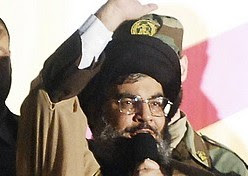 Yes, really
.
Hezbollah is a political party with a militia. That’s a big problem. Israel’s ultra-Orthodox Shas party has an outsized influence over Israel because of coalition politics. That’s a problem. The Muslim Brotherhood will loom large in a free Egypt because it has an organizational head start. That may be a problem. Turkey’s ruling Justice and Development Party is a brilliant political machine with a ruthless bent. That’s a problem, too.
Funny. I don't think Shas even has a 'military wing.'
Labels: Roger Cohen's obsession with Israel










